

Anthropomeme
TikTok's favourite commentator @superficialsharon talks meme accounts and absurd humour

MØRNING. Where other creators polish their opinions to marketable hooks and one-liners, @superficialsharon lets the unapologetic truths spill out. In her signature deadpan tone, Sharon’s TikTok anthropology covers romance, London city life, the creative industry, social media doomerism and more, under headlines such as ‘philosophy 4 plebs’, ‘you have cultural capital but no food in your fridge?’ and ‘popular loner syndrome’. Her threads of hotly-commented conversation never claim to be for everyone, but are now so prolific they’re featured on her favourite meme page, the iconic @still_on_a_downward_spiral. Lucky for us, the Anthropomeme-ologist is here to enlighten us about the accounts that raised her, and why absurd humour will never fail.
Over the years, I curated an internet cultural prowess that swings between the arcane sensitivity of a Middle American 4chan nihilist and the utter disbelief of the Department of Defense. Inevitably, a collapse of meaning was to swing into motion.
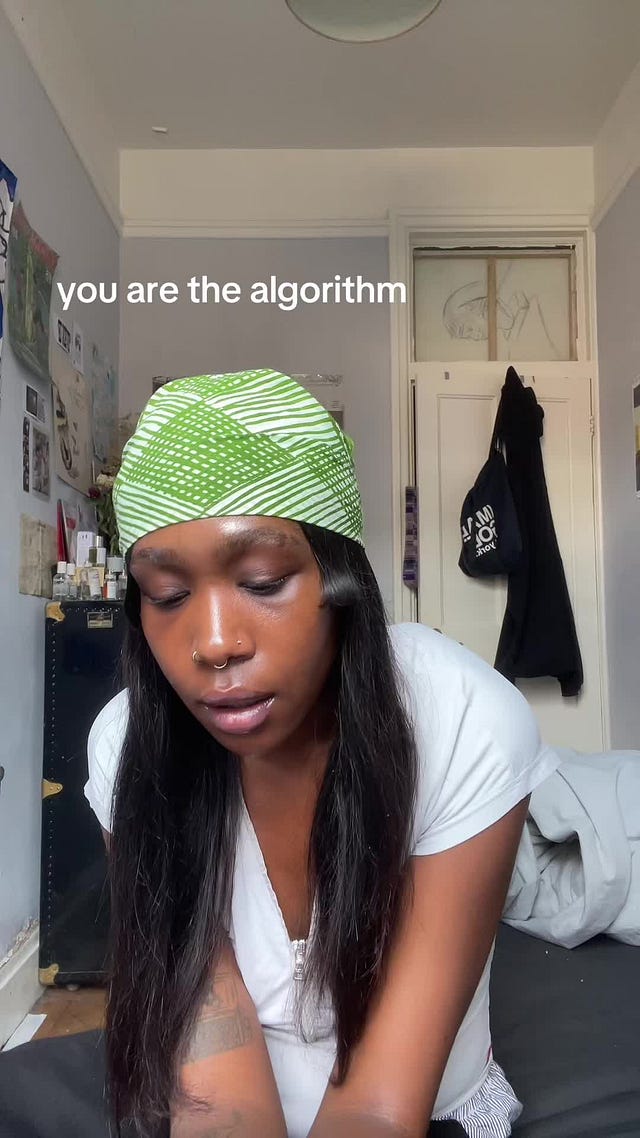
 Tiktok failed to load.
Enable 3rd party cookies or use another browser
Seduced by the godlessness of the online world, I became consumed by the internet’s sprawl, eventually finding myself in the strangest of binary backwaters. My journey began on Instagram circa 2015, age 14. I didn’t like school or my mum, so what was a jaded girl to do in Reading, England of all places? Left unsupervised on my cracked iPhone 5C, I became acquainted with the slop of internet meme circulation, my mind tube-fed by ultra-processed holograms of a square meal.
As meme culture was easier to compartmentalise and curate on Instagram, it was there that I slowly began crawling into ramshackle, lowbrow meme saloons, where cheap jokes flowed like lager during freshers. I became hooked on their crude, plebeian humour, checked out from IRL concerns. After finishing school, still at odds with my mother, I stayed roaming seedy Instagram terrains; teenage angst curdled into adult despair, my addiction to shitposts preserved.
My humour devolved alongside Instagram’s ouroboric anti-meme hood irony, self-cannibalising into random=funny. I still laughed. Years of brain rot provided encyclopedic online lore. Sentences became singular words. The jokes lay solely in the referential eureka moment of tracing an image to a meme you saw years ago, high and doomscrolling, when it was just scrolling. And I always happened to have been high and scrolling. Soon, the feedback loop between reality and online inverted, and my identity was overwritten by the media I consumed. It’s not that deep. Surely?
First and foremost, I am a beautiful woman. There are levels of depravity you can mask as charmingly unhinged quirks, but these later become symptomatic of a dislocated psyche. I became a collection of contextless, niche pathologies, with no stamina for my flatmate’s ‘Uni Starter Pack’ attempts at connection. Hooked on weird societal rejections and critiques masquerading as humour. The anthropomeme had reached its final, self-satirising form: irony for irony’s sake. The ironic brain rot metabolised, leaving only rot. Normies were rife, laughs became smirks, and a hollow question echoed: what are we even laughing at?
A case study of popular anthropomemes
Exhibit A: The Nation of Bilestan
Bileboye was a favourite of mine, a page parodying nationalism through the invention of the Bilestani people and their Moghadari rivals, fictional civic identities born from participatory online myth-making. Images were treated as national monuments, shitposts assumed the weight of policy, and the comment section was a parliamentary cabinet of chaos.
An unassuming man from an undisclosed South Asian country holds a gun amid desert rubble with no confidence. He fires, and as the barrel jolts, the bullet arcs into empty air. Nobody is harmed. The clip replays to reinforce his ineptitude. The top comment is ‘Moghdari Special Forces’; he is recast as an agent of the idiotic NPC culture the Moghdari embody. The Bilestani people are the sole purveyors of deliberate irony, revelling in the ambiguity of the performance. Their mockery becomes ritual, chaos into communion, and absurdity serves as both creator and audiences’ collective tongue—a microcosm of the hyperreal conjured from meta-irony.
Exhibit B: The Spiral
@still_on_a_downward_spiral is another key constellation in the ironic meme stratosphere. A catalogue of awkward, divinely timed screenshots and pop culture references broadcasts mutuality between young adults and their social anxieties. To foster camaraderie amongst its zit-faced enablers, S_O_A_D_S offers a space to express parts of themselves misunderstood offline, using in-jokes and idiosyncratic humour as both tool and shield.
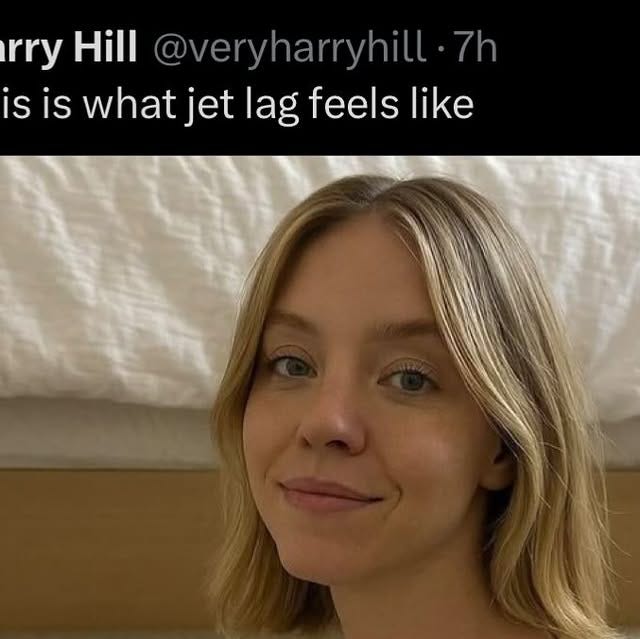
Similar to other insular online spaces, those spiralling downwards enforce a strict and opaque etiquette. Newcomers risk ridicule if they misread or “forgor” references, and the insularity becomes amplified by Instagram’s algorithm, creating a self-reinforcing bubble: membership is rewarded to those who already understand the complex cultural codes, while onlookers need to increase their screentime by 10 hours. A community was built that privileges hyperspecific humour at the expense of a wider, evolving dialogue. While fostering belonging, meta-irony quickly devolves into an emotionless cavity, somehow a flattened echo of the godlessness that first drew me in. As these digital environments fragment further, governed purely by their own logic, connection is further constrained.
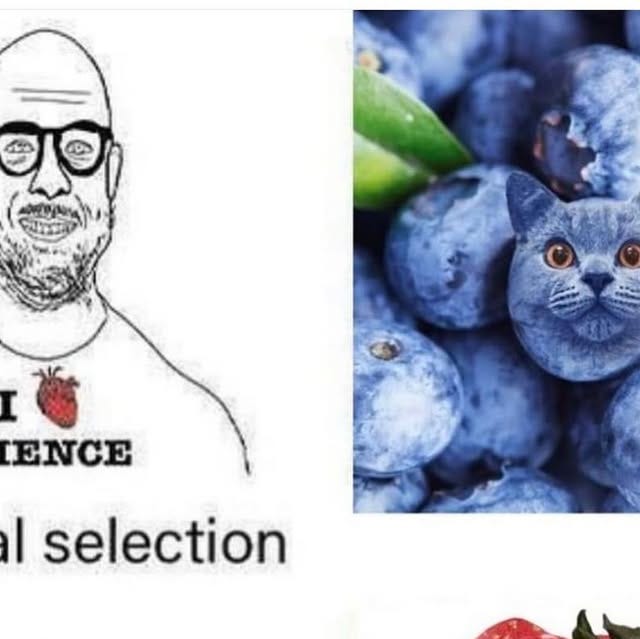
Together, Bileboye and Still_on_a_downward_spiral reveal the duality of Instagram’s landscape. They show the intimacies of micro-publics that both empower and constrain their eager participants, shaping how humour, identity, and community operate in a hyper-mediated environment. Representing contrasting yet relatable strata of Instagram’s absurdist ironic ecosystem, one incubating satirical-nationalism, the other a post-ironic alt youth club.
Eventually, meta-irony became more aesthetic than a release, the performance of disaffection calcified in its emotional detachment. For many, the realisation of our isolation and insignificance was not tragic but liberating. You can’t break off more of a world you’re not a part of, but ruin has its own beauty and I love to watch things break.
Now, I look back on that digital decay with both affection and unease; part archivist, part survivor of a feed that still shapes how I think and write. My foundational years taught me how absurdist humour functions as both deep connection and reflective commentary. I took my findings and ran to the nearest social media platform to share them, hoping to cultivate a space where belonging can form through absurdity, despite its transience. My online experience has shaped not just the content I create on TikTok, but how I think about storytelling and the ways humour illuminates the strange theatrics of human behaviour.
From Dadaists pushing for irreverence and punks sneering at civility, irony has long been the emblem of rebellion. But in the 21st century, on Instagram, irony didn’t just mock the system; it mocked itself, until nothing was left but empty laughter with no joke attached. Yet even as the joke untangles, we are still here, scrolling and laughing. Not because the world makes sense, but because we are finally permitted to witness its collapse, and with it our own, as unmoved spectators. Refreshing my feed after any global crisis, absurd memes and existential punchlines greeted me in a virtual mausoleum where irony had become the custodian of shared memory. No matter how unbearable, our fleeting, collective human experience stands beside itself; half witness, half XXXTentacion. And for a moment, it seemed everyone online had surrendered to the same quiet truth: nothing mattered.
Through this void, I’ve learned to understand online culture critically and playfully, tracing how communities form, how humour signals belonging, and how absurdity can both critique and console. My experience posting online carries that sensibility, shaping how I explore the anthropology of the internet: documenting the fleeting logic of digital spaces with curiosity and laughter. Now, absurdity is my companion, nihilism is comfort, and humour is a guiding spirit. The joke has no end, and that is the only truth we can trust.
Until next time readers.
Words by @superficialsharon. Edit by Sui Donovan and Shadeh Kavousian. Brought to you by @morning.fyi.
I will be 67 years old laughing at brain rot.
I wonder if the internet would exist in a utopia devoid of ruin and chaos. What would we even talk about if everything was supposedly perfect and equal?